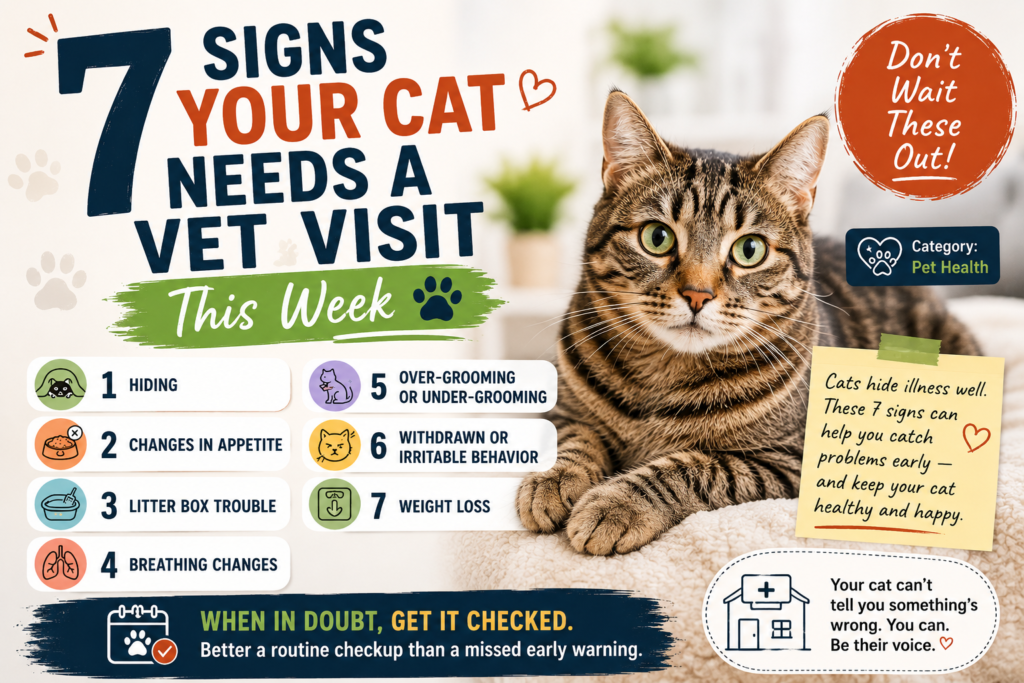
Cats are famously private about pain. In the wild, showing weakness makes an animal a target — so your cat’s instinct is to hide discomfort, not announce it. That’s exactly what makes it hard to know when something’s actually wrong versus when they’re just being a cat.
Here’s the good news: you don’t need to guess. Below are seven real signs that something deserves a vet’s attention this week, not “let’s wait and see.”
1. Hiding
If your normally social cat suddenly starts avoiding people, hiding under the bed, and won’t come out even for meals, pay attention. A little extra alone time now and then is normal cat behavior. But hiding that continues for more than 24 hours — especially paired with skipping food — is a signal that something is bothering them.
2. Changes in Appetite
A cat skipping meals for more than 24 hours is a real concern, and for a specific reason: cats who stop eating — even briefly — are at risk of developing hepatic lipidosis (fatty liver disease), a serious condition that can develop quickly, especially in overweight cats. Don’t wait this one out.
Separately, if your cat is eating more than usual while also losing weight, that combination can point to hyperthyroidism, which is a different issue but equally worth a vet visit. Either direction — eating much less or much more — is worth getting checked.
3. Litter Box Trouble
Straining in the litter box, going more frequently, urinating outside the box, or crying out in pain while urinating are signs that need same-day attention — especially in male cats, where this can signal a urinary blockage, a genuine emergency. Don’t wait this one out; get to a vet right away.
4. Breathing Changes
Rapid breathing at rest, or breathing with an open mouth, isn’t normal for cats the way it can be for dogs after exercise. If you notice labored, open-mouth, or unusually fast breathing, that’s worth an immediate vet check — this is one of the signs where “let’s see if it passes” isn’t the safe move.
5. Over-Grooming or Under-Grooming
A cat who obsessively licks the same spot until the fur thins or goes bald may be dealing with pain, allergies, or stress in that area. On the flip side, a cat who stops grooming altogether — leaving their coat greasy, matted, or unkempt — is also telling you something, since grooming is one of the first self-care habits cats drop when they don’t feel well.
6. Withdrawn or Irritable Behavior
A cat who suddenly becomes unusually calm and quiet, stops seeking attention, or seems irritable when touched — even by familiar people — may be showing early signs of pain. Increased vocalization or yowling, especially in older cats, can also signal discomfort. Trust your instinct here: you know your cat’s normal.
7. Weight Loss
Cats can lose weight slowly and gradually, which is easy to miss under a full coat. If you notice their ribs or spine more easily, or their waist looking more pronounced than usual, take note — gradual weight loss is one of the most common early signs of chronic illness in cats, and it’s often easier to catch by touch than by sight.
When to Wait vs. When to Go
A little extra sleep or one skipped meal usually isn’t an emergency. But hiding for more than 24 hours, straining in the litter box, labored breathing, or any sign lasting more than a day deserves a same-week vet visit — no guessing required.
Frequently Asked Questions
Why do cats hide when they’re sick? It’s instinct — in the wild, showing weakness makes an animal vulnerable, so cats are wired to mask pain and illness rather than display it. That’s exactly why subtle behavior changes matter so much.
Is it normal for a cat to skip one meal? An occasional skipped meal can happen, but if it lasts more than 24 hours, it’s a real concern — cats who stop eating are at risk of fatty liver disease, which can progress quickly.
When is a litter box issue a real emergency? Straining, crying out, or being unable to urinate is especially urgent in male cats, where it can signal a life-threatening urinary blockage. Don’t wait this one out — seek care right away.
Can behavior changes really mean my cat is sick? Yes — withdrawal, irritability, or increased vocalization are often among the earliest signs of pain or illness in cats, frequently appearing before any physical symptom does.
The Bottom Line
Cats don’t make it easy to know when something’s wrong — but you don’t have to be a vet to notice when something’s off. When a sign lingers, worsens, or just doesn’t feel right, a vet visit is always the safer choice. Better a routine checkup than a missed early warning.
If you’re a first-time cat owner still learning what’s “normal,” our First-Time Pet Parent Checklist is a good place to start.
Disclaimer: This post is for general information only and isn’t a substitute for professional veterinary care. If your cat is showing any of these signs, please contact your vet directly.
This post may contain affiliate links. As an Amazon Associate, we earn from qualifying purchases at no extra cost to you.