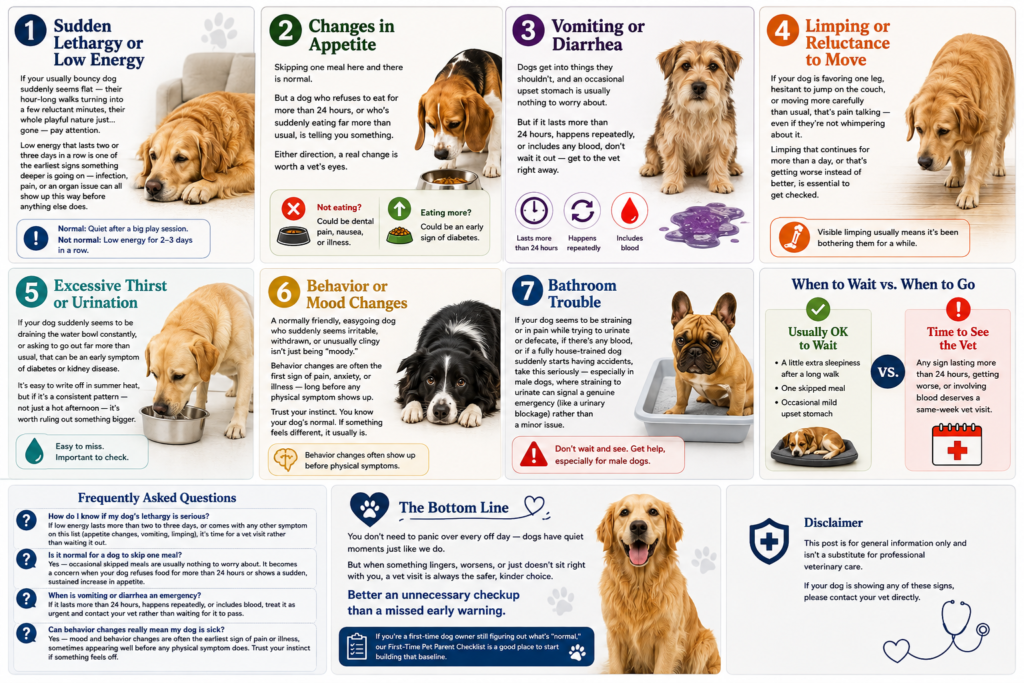
Dogs can’t tell us when something’s wrong — they can only show us. And because they’re so good at pushing through discomfort, it’s easy to second-guess yourself: is this really a big deal, or am I overreacting?
Here’s the honest answer: you know your dog better than anyone. If something feels off, it’s always worth checking. Below are the seven signs that genuinely warrant a vet visit this week — not next month, not “if it doesn’t get better on its own.”
1. Sudden Lethargy or Low Energy
If your usually bouncy dog suddenly seems flat — their hour-long walks turning into a few reluctant minutes, their whole playful nature just… gone — pay attention.
A quiet day after a big play session is completely normal. But low energy that lasts two or three days in a row is not. Lethargy is one of the earliest signs owners notice when something deeper is going on — infection, pain, or an organ issue can all show up this way before anything else does.
2. Changes in Appetite
Skipping one meal here and there is normal. But a dog who refuses to eat for more than 24 hours, or who’s suddenly eating far more than usual, is telling you something.
Dogs often avoid food when they’re not feeling well — dental pain, nausea, or something more serious can all be behind it. On the flip side, a noticeable increase in appetite can be an early sign of diabetes. Either direction, a real change is worth a vet’s eyes.
3. Vomiting or Diarrhea
Dogs get into things they shouldn’t, and an occasional upset stomach is usually nothing to worry about. One episode of vomiting or diarrhea in a day is often fine on its own.
But if it lasts more than 24 hours, happens repeatedly, or includes any blood, don’t wait it out — get to the vet right away. This is one of the clearer “don’t guess, just go” situations.
4. Limping or Reluctance to Move
If your dog is favoring one leg, hesitant to jump on the couch, or moving more carefully than usual, that’s pain talking — even if they’re not whimpering about it.
Limping that continues for more than a day, or that’s getting worse instead of better, is essential to get checked. Dogs are experts at hiding pain, so visible limping usually means it’s already been bothering them for a while.
5. Excessive Thirst or Urination
If your dog suddenly seems to be draining the water bowl constantly, or asking to go out far more than usual, that can be an early symptom of diabetes or kidney disease.
It’s easy to write off in summer heat, but if it’s a consistent pattern — not just a hot afternoon — it’s worth ruling out something bigger. This is a subtle sign that’s easy to miss until it’s been going on for a while.
6. Behavior or Mood Changes
A normally friendly, easygoing dog who suddenly seems irritable, withdrawn, or unusually clingy isn’t just being “moody.” Behavior changes are often the first sign of pain, anxiety, or illness — long before any physical symptom shows up.
Trust your instinct here. You know your dog’s normal. If something feels different, it usually is.
7. Bathroom Trouble
If your dog seems to be straining or in pain while trying to urinate or defecate, if there’s any blood, or if a fully house-trained dog suddenly starts having accidents, take this seriously — especially in male dogs, where straining to urinate can signal a genuine emergency (like a urinary blockage) rather than a minor issue.
This is one sign where “let’s just watch and see” isn’t the safe move.
When to Wait vs. When to Go
A little extra sleepiness after a long walk, or one skipped meal, usually isn’t cause for alarm. But any sign lasting more than 24 hours, getting worse, or involving blood deserves a same-week vet visit — no guessing required.
Frequently Asked Questions
If low energy lasts more than two to three days, or comes with any other symptom on this list (appetite changes, vomiting, limping), it’s time for a vet visit rather than waiting it out.
Yes — occasional skipped meals are usually nothing to worry about. It becomes a concern when your dog refuses food for more than 24 hours or shows a sudden, sustained increase in appetite.
If it lasts more than 24 hours, happens repeatedly, or includes blood, treat it as urgent and contact your vet rather than waiting for it to pass.
Yes — mood and behavior changes are often the earliest sign of pain or illness, sometimes appearing well before any physical symptom does. Trust your instinct if something feels off.
The Bottom Line
You don’t need to panic over every off day — dogs have quiet moments just like we do. But when something lingers, worsens, or just doesn’t sit right with you, a vet visit is always the safer, kinder choice. Better an unnecessary checkup than a missed early warning.
If you’re a first-time dog owner still figuring out what’s “normal,” our First-Time Pet Parent Checklist is a good place to start building that baseline.
Disclaimer: This post is for general information only and isn’t a substitute for professional veterinary care. If your dog is showing any of these signs, please contact your vet directly.
This post may contain affiliate links. As an Amazon Associate, we earn from qualifying purchases at no extra cost to you.