Standing in the dog food aisle can feel like a test you didn’t study for. Every bag promises “premium,” “natural,” or “holistic.” Meanwhile, your wallet wants the cheaper bag, and a little guilt tags along.
Here’s the good news: a higher price doesn’t automatically mean a better food. Even the WSAVA nutrition guidelines note that words like “premium” and “holistic” carry little practical value, because no rules define them. What matters more is the company behind the bag.
What “Vet-Recommended” Actually Means
No official seal exists. The World Small Animal Veterinary Association (WSAVA) does not approve or certify any dog food brand. Instead, it publishes questions you can ask a manufacturer:
- Does the company employ a qualified nutritionist?
- Who formulates the recipes, and what are their credentials?
- Has the company tested its foods through feeding trials?
- What quality control does it use?
- Does it publish nutrition research?
Many vets use these questions as a starting point. Critics point out two limits, though. The guidelines focus on company practices rather than specific nutrients, and they tend to favor large manufacturers.
So treat “vet-recommended” as a useful filter, not a final verdict. Your own vet knows your dog best. Also remember that prices, formulas, and company practices change, so confirm the details on each brand’s website before you buy.
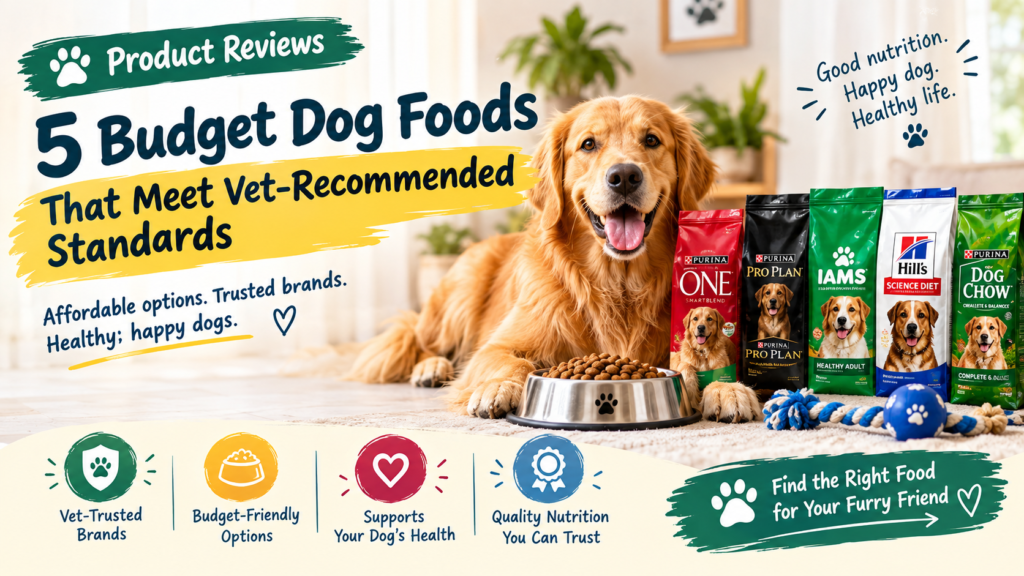
5 Budget-Friendly Dog Foods From Vet-Trusted Companies
| Brand | Price tier | Best for |
| Purina ONE | $–$$ | Healthy adult dogs on a budget |
| Purina Pro Plan | $$ | Dogs with specific needs |
| IAMS | $–$$ | Simple adult or senior formulas |
| Hill’s Science Diet | $$–$$$ | Owners who want a clinic-trusted brand |
| Purina Dog Chow | $ | The tightest budgets |
Price tiers are relative and change by store, bag size, and formula. Check current prices before you buy.
1. Purina ONE
Best for: Healthy adult dogs on a tight budget.
Why it makes the list: Vets often name Purina when they discuss manufacturer quality. Purina ONE gives you that backing at a friendly price, with formulas for different life stages.
Keep in mind: Pick the formula that matches your dog’s age and size. A puppy needs a different food than a senior.
2. Purina Pro Plan
Best for: Dogs with specific needs, like sensitive stomachs, weight control, or active lifestyles.
Why it makes the list: Pro Plan offers many targeted formulas under one company. You can stay with one brand as your dog’s needs change.
Keep in mind: It costs more than Purina ONE, and the difference adds up fast for large dogs.
3. IAMS
Best for: Owners who want a straightforward formula for adult or senior dogs.
Why it makes the list: IAMS often appears in “best budget” roundups, and the company behind it runs its own pet nutrition research.
Keep in mind: Ingredient lists vary between product lines, so compare the label of the exact formula you plan to buy.
4. Hill’s Science Diet
Best for: Owners who want a brand many vet clinics stock.
Why it makes the list: Hill’s builds its brand around veterinary nutrition science. It offers formulas by life stage, size, and common concerns.
Keep in mind: This is the priciest pick on the list. Also, don’t confuse Science Diet with Hill’s prescription diets. Your vet has to prescribe those.
5. Purina Dog Chow
Best for: The tightest budgets.
Why it makes the list: It comes from the same company as the two Purina picks above, at the lowest price on this list.
Keep in mind: It suits many healthy adult dogs. Dogs with allergies, sensitive stomachs, or health conditions often need a more targeted formula, so ask your vet.
Read the Label in 60 Seconds
- Find the AAFCO statement saying the food is “complete and balanced” for your dog’s life stage
- Look for a named animal protein, like chicken or beef, near the top of the ingredient list
- Check the calories per cup so you can portion correctly
- Confirm the company lists a phone number or email for questions
- Match the formula to your dog’s age and size
How to Switch Foods Safely
Switch gradually over 7 to 10 days. Start with about 25% new food and 75% old food. Then shift the mix every couple of days until you serve 100% new food.
Watch your dog’s stool, appetite, and energy along the way. If vomiting or diarrhea lasts more than 24 hours, call your vet. Our guide to the signs your dog needs a vet visit covers what else to watch for.
Frequently Asked Questions
Is expensive dog food always better?
No. Price doesn’t guarantee quality, and terms like “premium” and “holistic” have no official definition. Judge the company, the label, and how your dog does on the food.
Is grain-free dog food better?
Not unless your vet says your dog needs it. The FDA has looked into a possible link between some grain-free diets and a heart condition in dogs, and research continues. Ask your vet before you choose a grain-free formula.
How do I know if a food suits my dog?
Give it several weeks. A good fit shows up as steady energy, a healthy coat, normal stools, and a stable weight.
Can I feed puppy food to my adult dog?
Skip it. Puppy formulas pack more calories for growth, which can lead to weight gain in adult dogs. Choose a formula for your dog’s life stage.
The Bottom Line
You don’t need the most expensive bag to feed your dog well. Start with a company vets trust, choose the formula that fits your dog’s life stage, and watch how your dog responds over a few weeks. For dogs with special needs, your vet remains your best guide.
Bringing home a new dog? Our First-Time Pet Parent Checklist covers what to buy first.
Disclaimer: This post is general information, not veterinary advice. Every dog has different needs. Talk to your vet before you change your dog’s diet, especially if your dog has a health condition.
This post may contain affiliate links. As an Amazon Associate, we earn from qualifying purchases at no extra cost to you.