You did everything right. You bought the post, put it somewhere reasonable, and waited. And your cat walked straight past it to your couch arm like it wasn’t even there.
Here’s the reassuring truth: this isn’t defiance, and it doesn’t mean your cat is impossible to train. Scratching is instinctive — it sharpens claws, marks territory, and stretches muscles — so cats aren’t avoiding the behavior, they’re rejecting the specific post you gave them. Once you know why, the fix is usually simple.
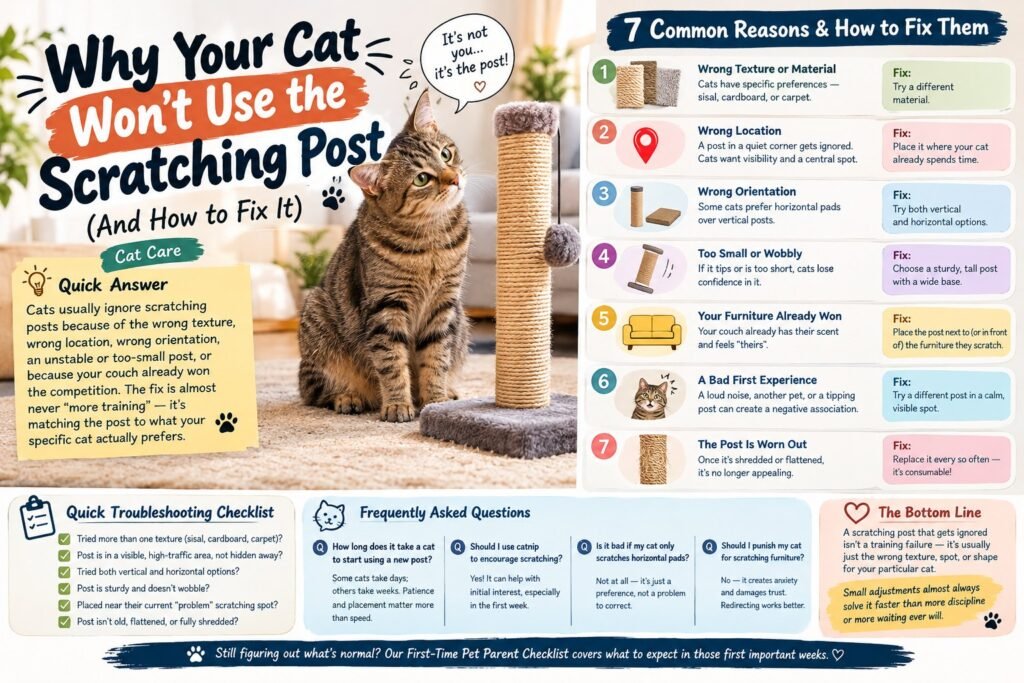
1. Wrong Texture or Material
Cats have strong, specific preferences for what they scratch. Some love sisal rope, others prefer cardboard, and some go for carpet. If your post is one texture and your cat’s instinct points to another, they’ll skip it entirely — no amount of encouragement changes that preference.
Fix: if your current post isn’t working, try a completely different material before assuming your cat “just doesn’t like scratching posts.”
2. Wrong Location
Scratching is also a marking behavior — cats want to leave their scent somewhere visible and central, not tucked away in a back room nobody visits. A post shoved in a quiet corner often gets ignored simply because it’s not where your cat wants to make a statement.
Fix: place the post somewhere your cat already spends time — near a favorite window, by the couch, or right next to whatever furniture they’re currently scratching instead.
3. Wrong Orientation
Not all cats are vertical scratchers. Some strongly prefer horizontal scratching pads laid flat on the floor, especially if they tend to stretch out low rather than reach up high.
Fix: if a vertical post isn’t working, try a flat scratching pad instead — this alone solves the problem for a lot of cats.
4. It’s Too Small or Wobbly
A scratching post needs to let a cat fully extend and dig in without the whole thing tipping over. If the post wobbles, tips, or is too short for your cat to stretch out fully, they’ll lose confidence in it fast — often after just one shaky attempt.
Fix: look for a post at least as tall as your cat standing on hind legs, with a wide, stable base that doesn’t rock when scratched.
5. Your Furniture Already Won
If your cat has been scratching the couch for months before the post showed up, that spot already has their scent on it — which makes it more appealing, not less. Cats aren’t choosing furniture out of spite; they’re choosing the spot that already smells like “theirs.”
Fix: place a post directly next to (or even in front of) the furniture they currently scratch, then gradually move it once the habit shifts.
6. A Bad First Experience
If a cat was startled while using a post — a loud noise, another pet interrupting them, the post tipping over mid-scratch — they can form a lasting negative association with it, even if the post itself was fine.
Fix: if this might be the case, try a different post entirely in a calm, low-traffic (but still visible) spot, rather than reintroducing the same one.
7. The Post Is Worn Out
Ironically, a well-loved post can become less appealing over time. Once the sisal is shredded smooth or the cardboard is flattened, it no longer satisfies the physical need to dig in and shred — so your cat moves on to something with more resistance.
Fix: scratching posts are consumable, not permanent — plan to replace them every so often rather than expecting one to last forever.
Quick Troubleshooting Checklist
If you’ve checked all of these and it’s still not working, it’s rarely a lost cause — it usually just means the exact right combination hasn’t clicked yet.
Frequently Asked Questions
How long does it take a cat to start using a new scratching post? Some cats take to a new post within days; others take a few weeks, especially if you’re also trying to redirect them from furniture at the same time. Patience and placement matter more than speed here.
Should I use catnip to encourage scratching? Yes — rubbing catnip on a new post (or using a catnip spray) can help draw initial interest, especially in the first week. It’s not a permanent fix on its own, but it’s a helpful nudge.
Is it bad if my cat only scratches horizontal pads and ignores vertical posts? Not at all — that’s just a genuine preference, not a problem to correct. Many cats are lifelong horizontal scratchers; it’s just as valid as vertical scratching.
Should I punish my cat for scratching furniture? No — punishment tends to create anxiety without solving the underlying need, and can damage trust. Redirecting to a better-placed, better-suited post works far better than discouragement.
The Bottom Line
A scratching post that gets ignored isn’t a training failure — it’s usually just the wrong texture, spot, or shape for your particular cat. Small adjustments almost always solve it faster than more discipline or more waiting ever will.
Curious what else is normal (or not) in your cat’s early behavior? Our First-Time Pet Parent Checklist covers what to expect in those first important weeks.
This post may contain affiliate links. As an Amazon Associate, we earn from qualifying purchases at no extra cost to you.