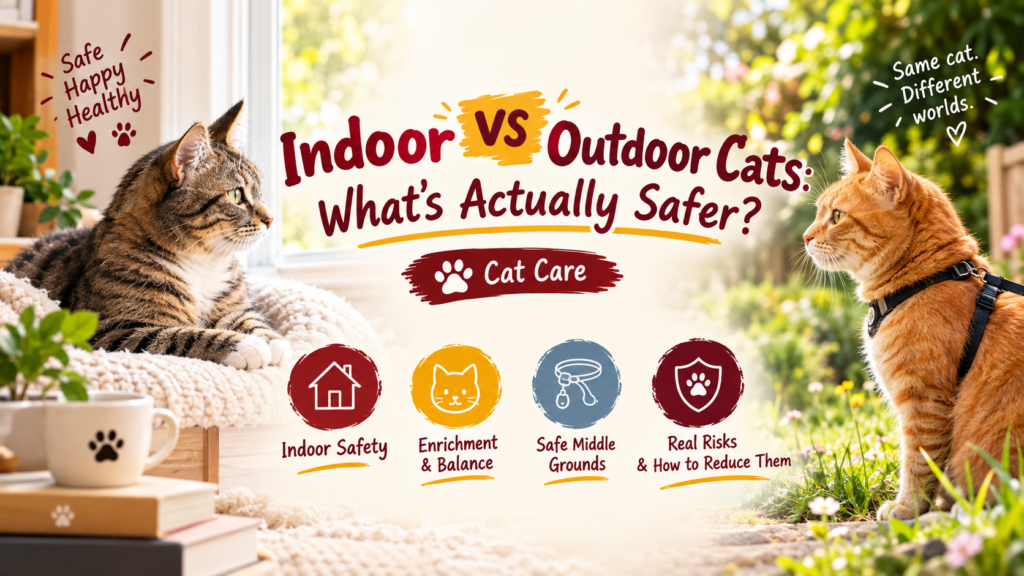
Your cat sits at the window, tail twitching, watching a bird land on the fence. And you wonder: am I being unfair?
Nearly every cat owner asks this at some point. Here’s the honest answer: keeping your cat indoors isn’t cruel. But it does come with a job. You have to make the indoors interesting enough that your cat doesn’t miss the outside.
Let’s look at what each lifestyle really involves, so you can choose with confidence.
The Short Answer: Indoor Is Safer, Not Perfect
Most vets agree that cats do best when they stay confined. That can mean an indoor home, a secure outdoor enclosure, or supervised time on a leash. Fully roaming outdoor cats face far more hazards.
That doesn’t mean indoor life has no downsides. Both options carry risks, and both need effort from you. Here’s how they compare.
| Indoor only | Indoor + catio or leash walks | Free-roaming outdoors | |
|---|---|---|---|
| Safety | Highest | High | Lowest |
| Main risks | Boredom, weight gain | Escape during outings | Traffic, fights, parasites, disease |
| What you need to do | Enrich the home | Build or buy a safe setup | Vet prevention and constant vigilance |
The Real Risks of Outdoor Life
Outdoor cats face dangers that indoor cats simply avoid:
- Cars. Roads are one of the biggest threats to roaming cats.
- Fights. Bites and scratches from other cats can become infected, and cats can pass diseases to each other through contact.
- Parasites. Outdoor cats pick up fleas, ticks, and intestinal worms much more often.
- Predators. Coyotes and loose dogs can attack a cat in minutes.
- Toxins. Cats can eat poisonous plants or lick up chemicals like antifreeze.
- Getting lost. Cats wander farther than most owners expect, and some never find their way home.
What About Lifespan?
You’ll often see the claim that indoor cats live 10 to 15 years while outdoor cats live only 2 to 5. Many sources repeat those numbers. But estimates vary, and newer analyses suggest the gap may be smaller than that.
Every source agrees on the direction, though. Indoor cats typically live longer than roaming outdoor cats. Treat the exact numbers with caution, but take the pattern seriously.
Indoor Life Has Its Own Risks
Indoor cats avoid the outdoor dangers, but they face challenges too:
- Boredom and stress. A cat with nothing to do can become restless, destructive, or withdrawn.
- Weight gain. Less exercise plus bored snacking adds up fast.
- Stress-related health issues. Stress can contribute to urinary problems in some cats.
- Escape attempts. A cat who craves the outdoors may bolt through every open door.
The good news: you can fix every one of these at home.
How to Make Indoor Life Great
Think like a cat. In the wild, cats climb, hunt, scratch, and watch. Give your cat safe ways to do all four:
- Go vertical. Cat trees and wall shelves give your cat height to climb and survey.
- Add a window perch. A bird feeder outside the window works like cat TV.
- Offer a good scratching post. If yours gets ignored, our guide on why your cat won’t use the scratching post can help.
- Play every day. Aim for a couple of short play sessions with a wand toy to mimic hunting.
- Use puzzle feeders. Making your cat “work” for meals burns energy and prevents boredom eating.
- Rotate toys. Swap them out weekly so they stay interesting.
Safe Ways to Give Your Cat Outdoor Time
You can offer fresh air without the risks:
- A catio. This enclosed outdoor space lets your cat enjoy sights, sounds, and smells safely. You can buy a kit or build one.
- Harness and leash walks. Many cats learn to enjoy them. Start slowly indoors, use a secure cat harness, and let your cat set the pace.
- A secure window or balcony enclosure. This works well for apartments.
Skip the “fenced yard and hope for the best” approach. Cats are nimble escape artists, and fences alone rarely keep them in.
If Your Cat Already Goes Outside
Some cats already live an indoor-outdoor life, and that’s a hard habit to change overnight. If your cat goes outside, you can still lower the risks:
- Spay or neuter your cat. This reduces roaming and fighting.
- Keep vaccines and parasite prevention current. Ask your vet what your cat needs.
- Microchip your cat. Add a breakaway collar with an ID tag too.
- Bring your cat inside at night. Dusk to dawn is when many dangers peak.
- Schedule regular checkups. Our guide to the signs your cat needs a vet visit lists what to watch for.
If you want to move your cat indoors, do it gradually. Add enrichment first, then shorten outdoor time over several weeks.
Which Choice Fits Your Cat?
- Kitten or new cat: Start indoors. It’s much easier than taking outdoor access away later.
- Cat who already goes outside: Transition slowly, with lots of indoor enrichment.
- Senior cat or cat with health problems: Keep your cat indoors where you can monitor them.
- Cat who craves the outdoors: Try a catio or leash walks before you give up on the idea.
Frequently Asked Questions
Is it cruel to keep a cat indoors?
No. Cats can live happy, full lives indoors when you give them places to climb, things to hunt, and daily play. Boredom causes the problems, not the walls.
Will my cat be unhappy if I stop letting them outside?
Some cats complain for a few weeks. Add enrichment first, make the change gradually, and give your cat extra play time while they adjust.
Can I train my cat to walk on a leash?
Many cats learn, and younger cats usually adapt fastest. Start indoors with a well-fitted harness, keep sessions short, and never force it.
Do indoor cats still need vet care?
Yes. Indoor cats still need regular checkups, and your vet can tell you which vaccines and parasite prevention suit your cat’s lifestyle.
Are outdoor cats bad for wildlife?
Outdoor cats kill many birds and small animals each year. Keeping your cat indoors or in an enclosure protects local wildlife as well as your cat.
The Bottom Line
Indoor life is the safer choice for most cats, and a catio or leash walk can add the outdoor experience without the danger. You don’t have to pick between a safe cat and a happy one. With a little effort, you can have both.
New to cat ownership? Our First-Time Pet Parent Checklist covers the essentials for those first weeks.
Disclaimer: This post is general information, not veterinary advice. Every cat has different needs. Talk to your vet about vaccines, parasite prevention, and whether outdoor time suits your cat.
This post may contain affiliate links. As an Amazon Associate, we earn from qualifying purchases at no extra cost to you.